
Delivery of Trees to Threave
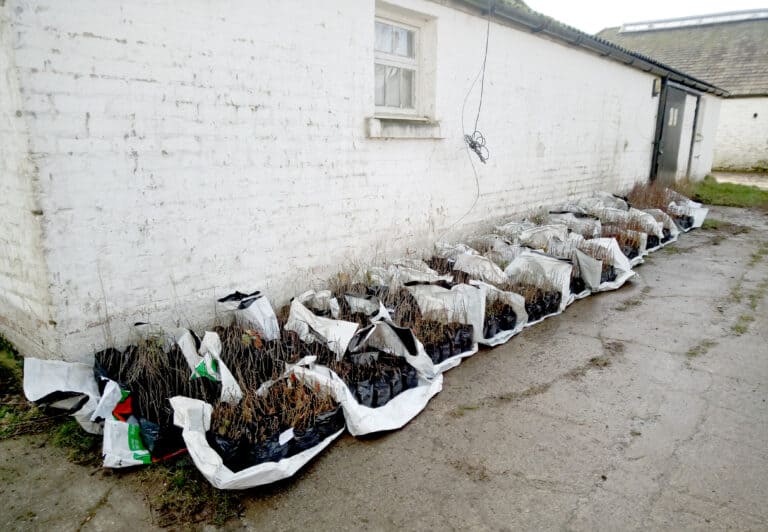
This was a very busy day – taking around 7000 trees to the National Trust for Scotland Threave Estate near Castle Douglas – a nice wee drive along the A75. They were to be planted over the coming weeks to help transform the Estate. There were another 4-5000 heading over a few weeks later to
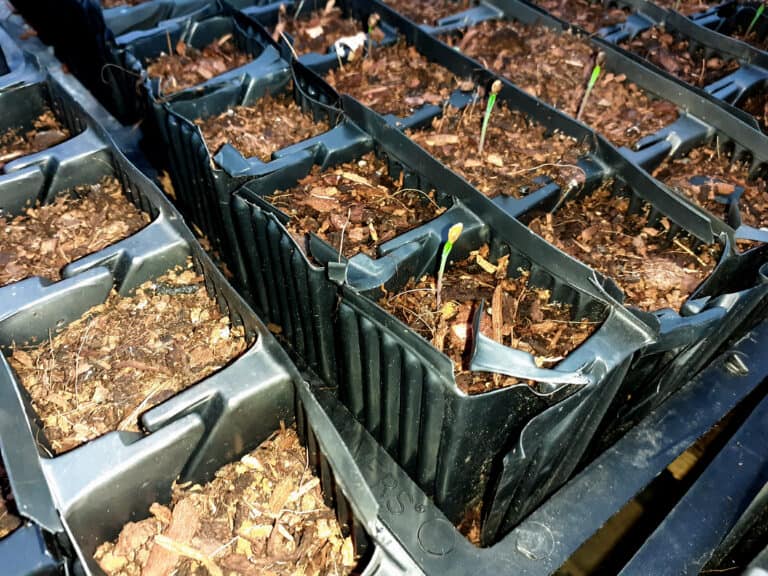
New growth!
It’s always exciting when the first shoots begin to show through! Above, we see our ‘crop’ of pine seedlings just showing through in the polytunnel. It is hard to think that such a delicate thing could become a large tree! And some pine seedlings doing well from a previous year! Have a look at our
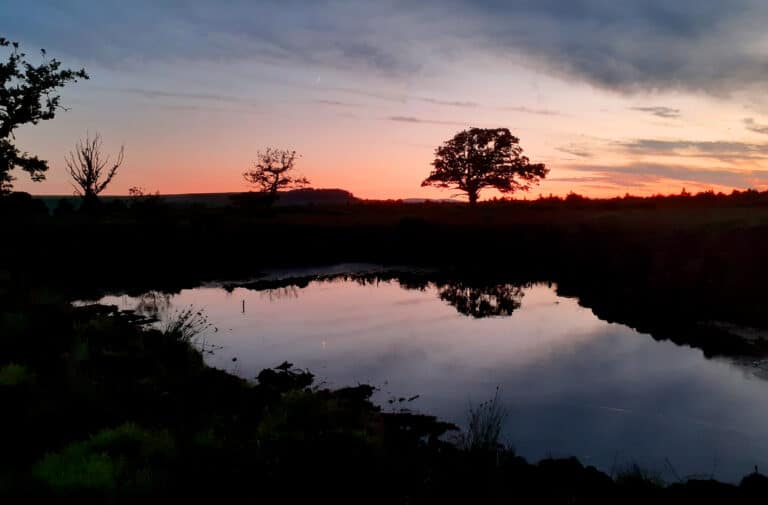
Caring for Wildlife at Beechgrove Trees
Wildlife pond creation in progress! Main image (top) shows the skyline beautifully reflected in the wildlife pond, which is naturally filling up nicely. Spotted this while checking around one of our ponds in September. I think it is a female southern hawker dragonfly. It was laying eggs just above the current water level. A (harmless)
Our Seed Trees
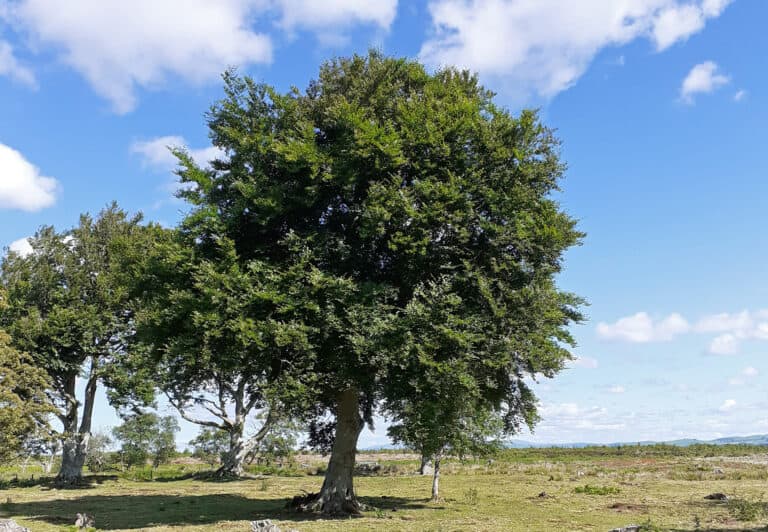
We thought you’d like to see some examples of our local seed trees. The main image (above) shows one of our beautiful beech [Fagus] seed trees in Dumfriesshire. An impressive, large Pedunculate Oak [Quercus robur] seed tree in Dumfriesshire. One of our crab apple seed trees in bloom – again in Dumfriesshire. A fine example
Sapling Protection
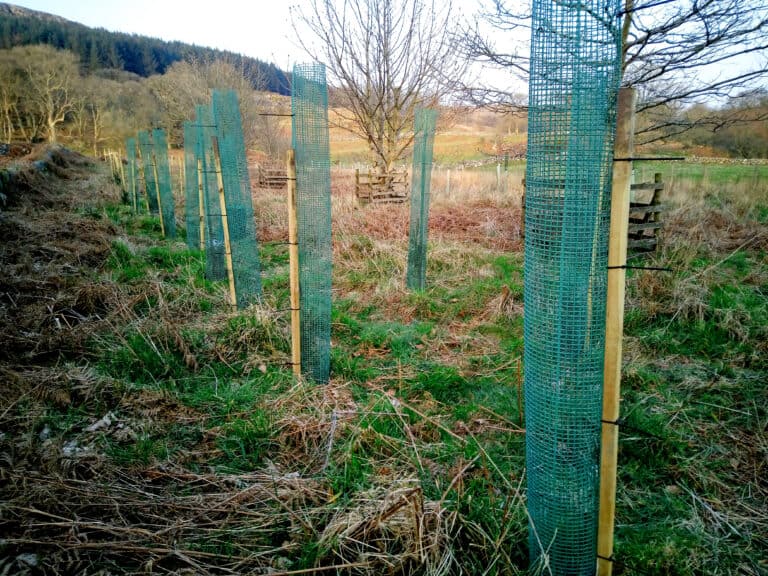
A few of our ‘on site’ examples which show one or two of the sapling protection guards and stakes we can supply along with your native trees. Fencing and tree planting project near Annan, South West Scotland. Beech near Comlongon with short tube and net guard above. A small area of fencing and small group
Native Crab Apple Collection
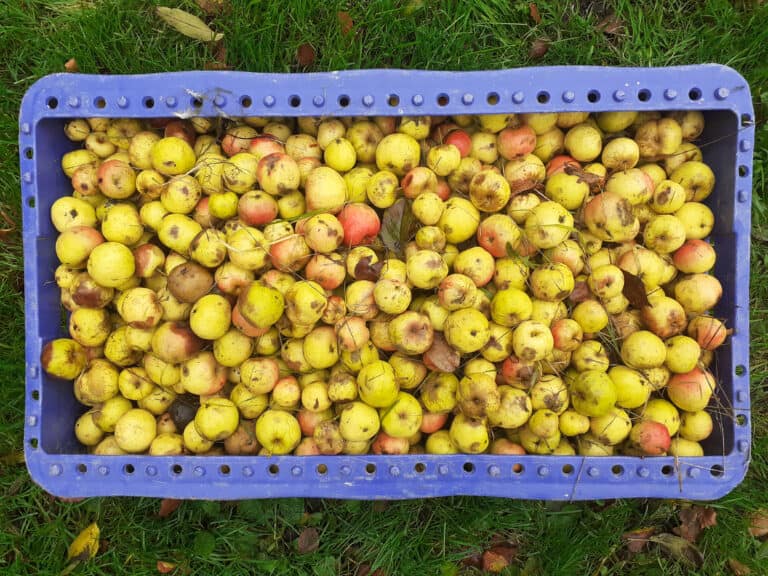
Collecting crab apples [Malus sp.] for their local seed. One of our crab apple seed trees in flower, local to Dumfriesshire in South West Scotland – blooming marvellous! The crab apples after collection. Crab apple cut showing seeds crop ready to extract. Harvested crab apple seed – nest step – planting. All by hand here
Bee leaf in trees
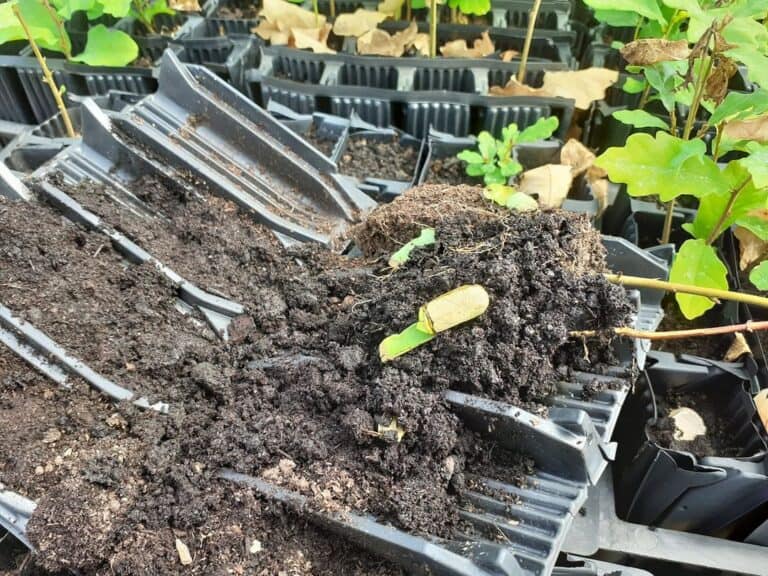
I was just moving a couple of locally-collected crab apple plants between growing cells and found these odd capsules made of leafy material. I took one apart and found a round ball of what appeared to be chewed up woody material. Not having seen anything like this before, I did a bit of online research

Funding available for Woodland Plantings
Recently Jonathan Barrett from the Galloway Glens Landscape Partnership visited to see our developing native tree nursery. They are offering funding for small woodland plantings on farms and by community groups. For the past few years, there has been a desperate shortage of all types of tree plants, and here at Beechgrove Trees and Hedging,
What is the Best Time of Year to Plant my Trees or Hedging?
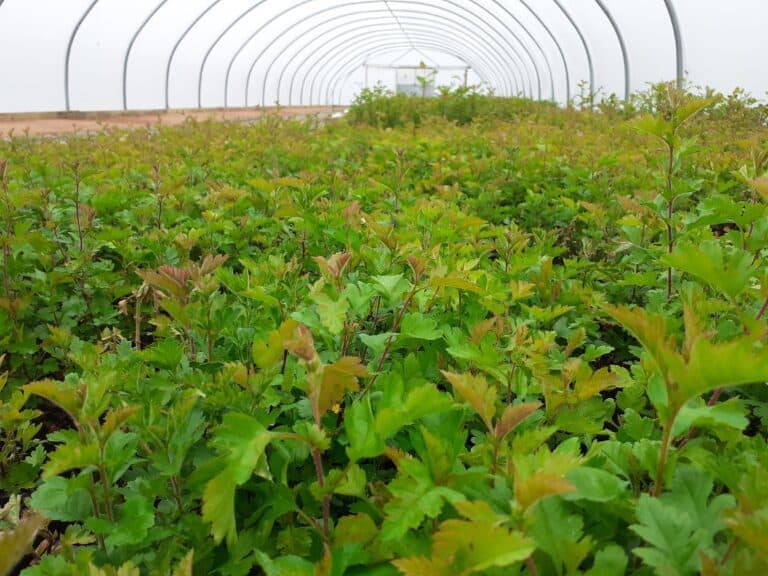
Generally we recommend planting your trees in the Autumn, Winter and the early part of Spring. With cell grown trees, you have more latitude than bare rooted trees. A bare rooted tree needs to be in the ground before it comes into leaf, thus the window of planting opportunity is greatly reduced. You’re generally looking
What is Seed Provenance?
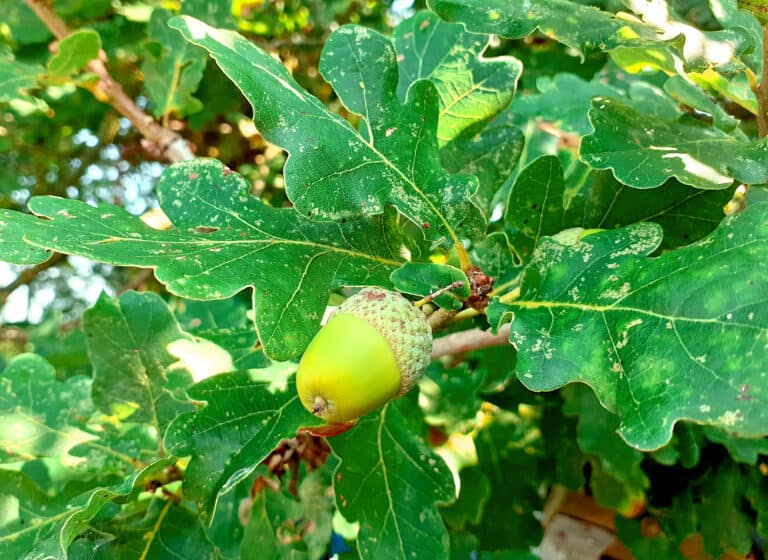
“Seed provenance” – a lovely phrase that rolls off the tongue effortlessly, yet makes you sound knowledgeable! What does ‘seed provenance’ mean? In a nut shell… seed provenance is ‘where the seed comes from’. In other words, where – geographically – the parent trees grow and the seed is collected (rather than e.g. coming
Tree and Hedging Planting Tips
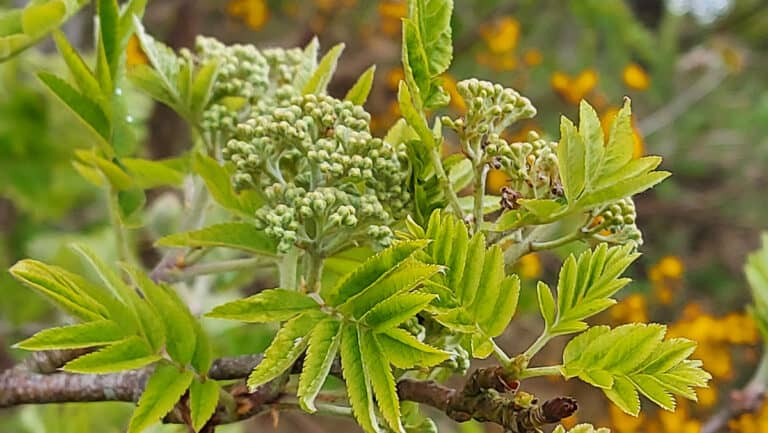
Preparation, preparation, preparation! Want to know our handy hints and tips on planting trees and hedging? Here are a few to give your young trees the best start in their new environment: Fit the tree species to your conditions (we can help advise if you’re uncertain): e.g. Heavy ground? Probably not pine! – Oak would
What are the Benefits of Using Native Broadleaf Trees?
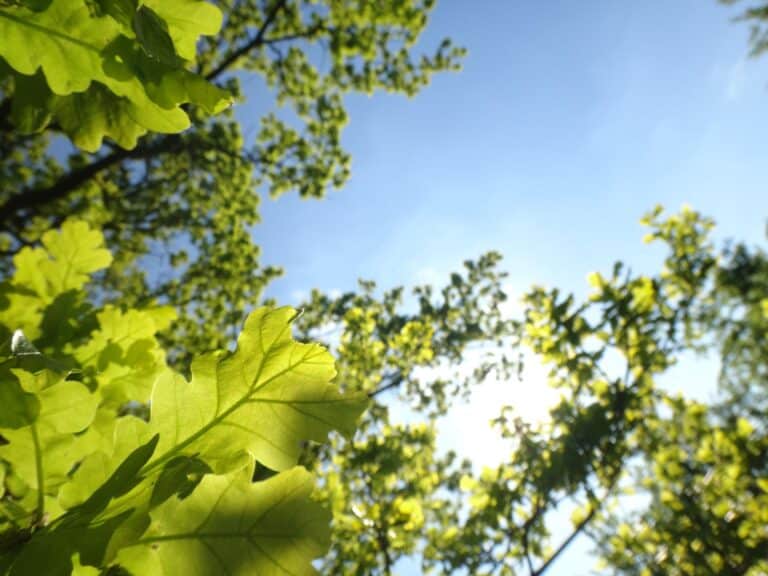
There are so many benefits to choosing native broadleaf (deciduous) trees! Herein lies an inexhaustive list – do let us know if you have other reasons to buy native broadleaves! The right tree for the right situation Native broadleaves grow in different ground conditions, so you can choose the tree that will do well on

How are our seed selected?
Where possible, we will try and collect seed locally from trees which are good examples of their species. We will try and collect from a range of individual trees, so as to get some genetic diversity in the collected seed. We keep records of where seed is collected from, so we will be able to
What trees will work best for our community projects?
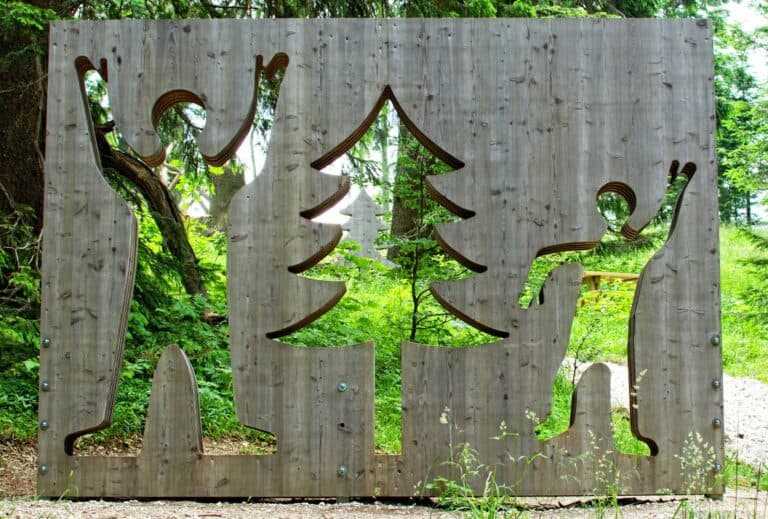
As with any project, it is best to look to plant trees which would grow well in the ground conditions and exposure of the site. For example, a heavy clay soil would usefully grow oak or beech, where as a dry, exposed site would favour birch and possibly pine. In order to help find the
What trees are best for an upland farm planting?
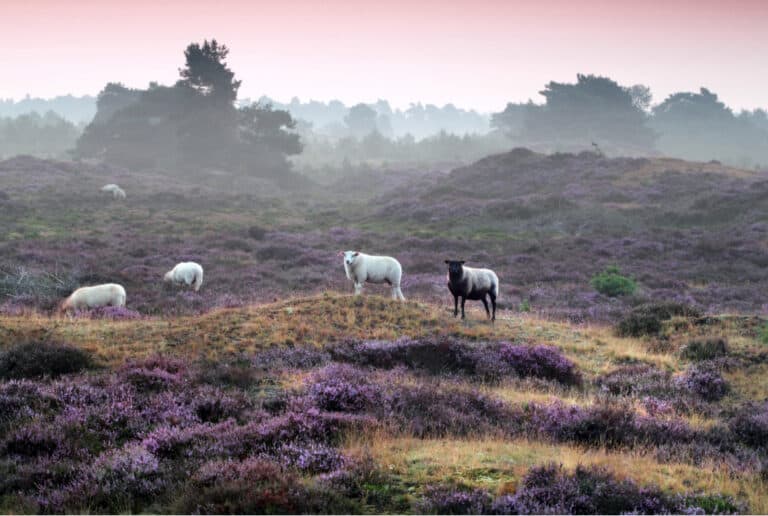
Most upland soils are generally fairly acid in nature, and more exposed. Some areas, such as scree areas and deep peat should not be planted. This can limit the range of trees which would do well, and mean that some options, such as tall tree tubes, may not be advisable. Hardy species such as sessile